
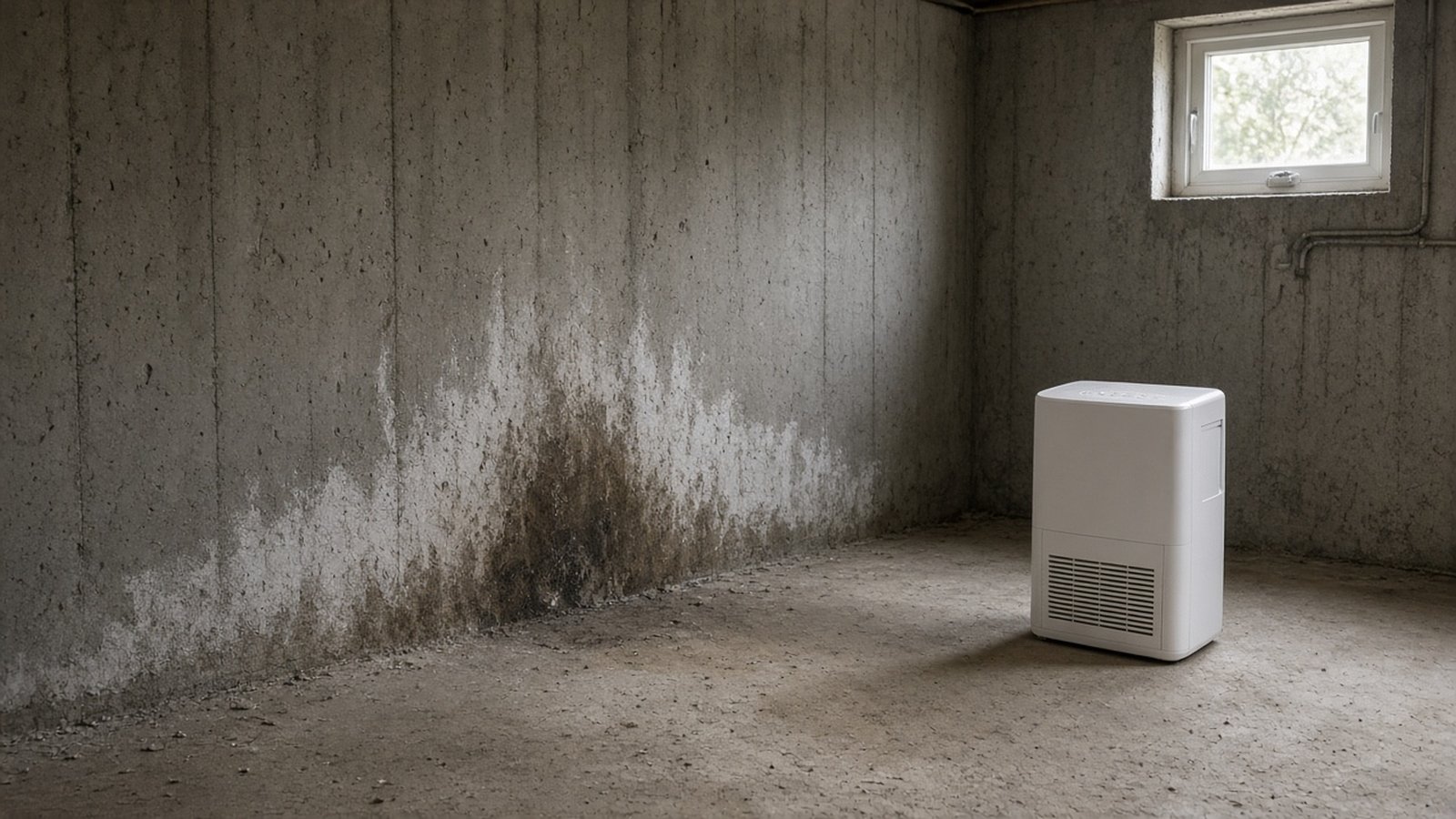
Damp Basement? Waterproofing, Drainage, or a Dehumidifier: How to Choose
A dehumidifier can’t pump a puddle back outside. That’s the first thing to get straight.
A damp basement is usually one of three problems: water coming in, condensation, or slow moisture working through the masonry. They all feel “damp.” They don’t get the same fix, and a bigger dehumidifier only handles one of them.
So figure out which one you’ve got. Then start outside. Most people skip that part, and a lot of the time it’s the whole fix.
Figure out what kind of damp it is
Water is getting in if you see puddles, stained lower walls, or a sump that runs hard every time it rains.
The air is wet and the walls are cold if stuff sweats on humid days even though it hasn’t rained. Cool masonry and rim joists do this a lot in summer. A cheap hygrometer will tell you more than guessing will.
Moisture is creeping through the slab or walls if you never get a puddle but you see white, powdery efflorescence, smell something musty, or find wood that’s cupping. “Waterproof paint” sometimes helps on a wall that’s already dry. On a wall that’s actively wet, it peels.
Timing is your best clue. Wet after rain, snowmelt, or the sprinkler? That’s incoming water. Wet on a humid day with no rain leans toward condensation. A wet line at the base of one wall, especially right under a downspout, is a drainage problem. Damp high up on a cold wall, or sweating pipes, is moisture in the air.
There’s also a cheap test. Tape a 12×12-inch piece of clear plastic to bare masonry, seal all four edges, and wait 24 to 48 hours. Moisture on the room side means condensation. Moisture on the wall side means it’s coming through the masonry.
A moisture meter works on the same idea. Compare the suspect spot to a dry area of the same material. On concrete, the number is only relative, so don’t read it like a wood percentage.
One hard stop. If walls are bowing, or a crack is new and getting wider, quit shopping for a dehumidifier and get a professional to look at it.
Do the outside stuff first
This is the cheap part, and honestly it’s where I’d put my first weekend. Do it in order, then watch the next few real rains.
Clean the gutters. Packed gutters overflow and dump water right down the foundation.
Extend the downspouts. A downspout that ends at the wall is a classic “mystery” wet basement. You want the water landing about 6 to 10 feet out, on soil that slopes away from the house. A flexible or rigid extension and a splash block will often do it, and those parts are typically under $20 at a hardware store. If you hate how that looks, bury a line out to a pop-up emitter.
Fix the grade if you can. Soil should slope away from the foundation. A common guideline is about 6 inches of drop over the first 10 feet, though your lot might not allow it. Settled backfill and mulch beds are usually what create a bowl against the wall.
Check the window wells. A clogged drain, a missing cover, or mulch piled over the lip will put water in your basement in a hard rain. Measure the well before you buy a cover.
Aim the sprinklers away from the house. Simple, but people miss it.
If it only acts up in storms, do all this and wait through a few more rains before you pay for a full interior system.
When a dehumidifier is worth buying
When the air’s the problem. Musty rooms, walls sweating on humid days, no flooding when it storms. Or you already stopped the water and you just want the space comfortable.
Get a basement-size unit. A closet-size one won’t keep up. Drain it with a hose into a floor drain, standpipe, or sump so you’re not hauling buckets. If it has to push water up and out a window, add a condensate pump. If your basement stays chilly, get one with auto-defrost, because some units ice up and shut off. A humidistat is worth having so it holds a target. A decent Energy Star basement unit often runs a few hundred dollars, and it’s worth the money if the air really is the issue.
For a finished basement, a typical target is about 30 to 50% relative humidity. Lower isn’t always better in winter, since colder walls condense sooner.
Put it out in the open and run the hose downhill. Check the filter and hose a couple times a season.
Still emptying a bucket after every storm? Then the dehumidifier isn’t your fix for that part.
Water still coming in? Talk sump, drain, or real waterproofing
If water still shows up at the floor-wall joint after you did the outside work, or the sump can’t keep up, an interior drain and a reliable pump are often the practical retrofit. The idea is simple. Collect the water at the perimeter and send it out, instead of betting on paint.
Here’s what I’d ask anyone bidding it. Where exactly is the water getting in? Do I need a full perimeter drain or something smaller? Where does the discharge go? (It shouldn’t dump right back against the foundation.) Are a check valve, a high-water alarm, and backup power in the bid? That backup matters, because the same storm that floods the yard can knock out the power. A battery or water-powered backup covers you.
Also ask if the inspection is free and how the system gets serviced. Interior systems skip a huge dig outside, but you’re now relying on a pump you have to maintain.
Full exterior excavation (digging down to the footing, fixing a membrane, often repairing drain tile) is a bigger job. It’s worth talking about when the walls need to be exposed anyway, or the problem can’t be handled from inside. It’s a lousy substitute for a downspout extension.
Last thing. Don’t finish a basement that’s still taking on water. “It seemed fine this month” is how new walls get wet from the back side. Before you close anything in, know what that space does in a real storm and in the humid season.
The short version
Water after rain? Fix gutters, downspouts, grade, and window wells, then watch the next storms. If it still comes in at the footing, talk to a contractor about an interior drain and a sump with backup power.
Musty air and sweaty walls but no flooding? Measure the humidity and set up a dehumidifier that drains through a hose. Walk the outside anyway. You can have both problems.
Just some efflorescence or slightly damp masonry? Go slow. Compare meter readings, and don’t seal a wall that needs to dry.
Walls moving or a crack getting wider? Get a professional look before you buy a single product.
FAQ
Will a dehumidifier stop my basement from flooding in a storm?
No. It pulls moisture out of the air. It won’t do anything about a drowned window well or a sump that’s underwater. Use it for humidity once the water’s under control.
How dry should a basement be?
For a lot of finished basements, about 30 to 50% relative humidity is a reasonable place to start. A typical $10 to $20 hygrometer beats guessing.
Are “waterproofing paints” worth it?
Sometimes, on a wall that’s already mostly dry. For an active leak or water under pressure, they’re a weak plan. If the paint is bubbling, the wall’s still wet.
Do I need a sump pump if I already have a dehumidifier?
They do different jobs. A sump moves liquid water. A dehumidifier dries the air. Some basements need one, some need the other, and some need both.
I fixed the downspouts. How long should I wait before bigger work?
Watch the next several real rains, plus the season that used to soak it. If the floor stays dry, you might already be done. If it doesn’t, at least you’ll have better information to give a contractor.