Repair or Replace Your Roof? How to Decide Before You Get Quotes
If the rest of your roof is worn out, a repair is money you’ll throw away. You’ll be tearing that patch off with everything else in a couple of years.
So before you compare a repair quote to a replacement quote, figure out how much life the whole roof has left.
Don’t just stare at the drip
A ceiling stain tells you water got in. It doesn’t tell you where. Water can run along the decking or down a chimney chase and show up a few feet (or a room) away from the actual failure.
Start with age. Plenty of three-tab roofs last about 15 to 20 years. Architectural shingles often go 20 to 30. Sun, hail, ice, or a sloppy install can cut that short.
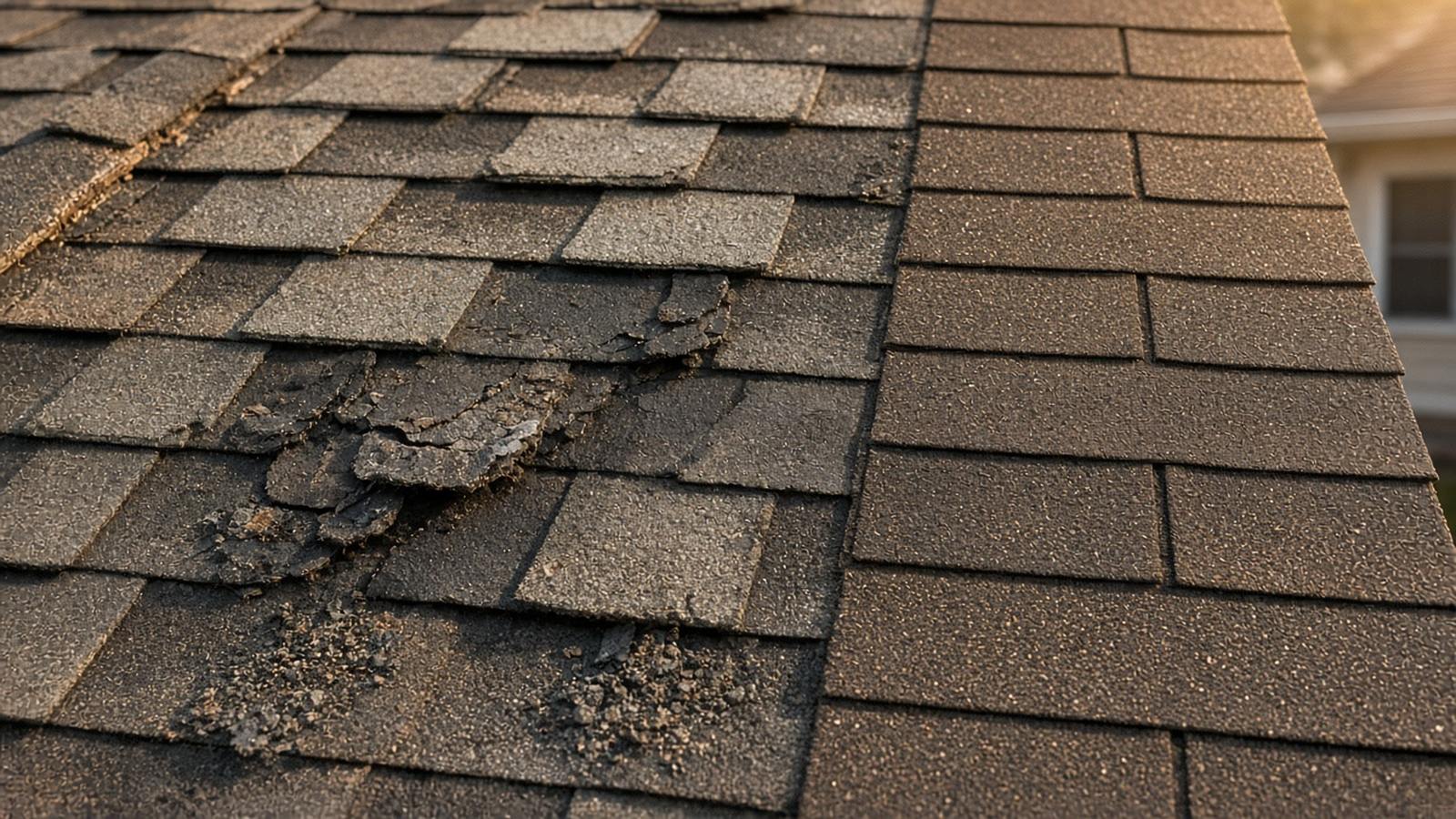
Then look. From the ground or a window, check for granules piling up in the gutters, curled or cracked shingles, bare spots, blow-offs on more than one slope, and any sag in the roofline.
If the whole thing looks tired, fixing one corner is buying time. Maybe that’s fine for a year. Just know that’s what you’re paying for.
Repair makes sense when it’s one problem on a decent roof
The roof is early or mid-life. The shingles look sound. The damage is in one spot and the deck is solid. That’s a repair.
The usual suspects are a cracked pipe boot, failed flashing around a chimney or skylight, or a handful of shingles that blew off. Replace the boot. Replace the flashing. Honestly, if someone’s plan is a smear of roof cement over it, that’s a patch, and it’ll probably fail again.
When I’d stop patching and replace it
The roof’s late in its life and worn across the whole field. Leaks keep popping up in new places. Or the same spot has been patched more than once.
Other signs it’s time: the deck is soft or the eaves are rotting, storm damage is spread all over, you can’t match the shingles, there’s a second layer that should already come off, or the repair price is a big chunk of what a new roof costs on a roof that’s already worn out.
Soft decking changes everything. If a foot sinks, or the underside looks stained and spongy from the attic, that wet sheathing has to come out. And whoever opens it up should keep looking past the first bad spot.
A moisture meter helps from the attic side. If you’ve stacked up several patches in a few years, stop. Ask every bidder the same question: “If we do this repair, what should I expect in three to five years?” Their answer tells you a lot.
You can see daylight or the deck feels soft. Now what?
This is a today problem. Stay off the roof.
Soft or unstable decking can give way under you. Don’t climb up to inspect it, patch it, or tarp it. Don’t walk on a soft spot to “get a better look.” I mean it.
Protect the inside first. Move furniture and boxes, put buckets under the drips, and cover floors and stuff with plastic or towels. If water’s near lights or outlets, stay out of that area. If you can get to the breaker panel safely, shut that circuit off.
Take pictures from the ground, a window, or the attic. Get the whole slope, any close-ups you can manage without climbing, the underside of the deck if you can see it, and every interior stain. Shingles that already came down? Don’t toss them. Photograph those too. Insurance will want all of it.
Then call a few roofing companies and ask if they do emergency tarping. A lot of them will do it free, or cheap, because they’re hoping to get the repair or the replacement. Before anybody comes out, ask three things. Is the tarp free? Do I owe you anything if I don’t hire you for the rest? How soon can you get here?
Once the house is dry, get the deck inspected and get a written scope. Soft sheathing is a structural problem. A tube of sealant won’t touch it.
One exception, and it’s a narrow one. If the damage is minor, the roof is solid and walkable, and you already have real experience working on roofs, a temporary tarp can be an option. That’s for experienced people only. It’s never the move when the deck feels soft or looks unstable. For daylight or a soft spot, stay on the ground and make the call.
Storm damage, insurance, and the guy at your door
A policy may cover sudden storm damage. Ordinary wear is usually on you. That’s not insurance advice, by the way. Your insurer makes the call. And if somebody knocks on your door and guarantees your claim will get approved? Big warning sign.
Get every scope in writing. For a repair, it should name the exact area, the part that failed (boot, flashing, shingles, deck), whether they’re replacing material or just sealing it, and what happens if they find wet sheathing.
For a replacement it needs more. Tear-off or lay-over. Underlayment. Where the ice-and-water shield goes. Drip edge, boots, flashing, ventilation. How extra decking gets priced. Who pulls the permit, and who warrants the labor.
A way cheaper bid usually means less work in the scope. Ask what’s missing.
And when you call, ask if the inspection is free, how soon they can tarp, and whether that visit locks you into hiring them.
FAQ
Can I just seal a roof leak myself?
Catch the water inside first, then call for emergency tarping. Climbing up to smear sealant isn’t the plan, especially when you don’t know if the deck is sound. And long term, roof cement over a failed boot usually fails again anyway.
How many times can a roof be repaired?
There’s no magic number. A sound mid-life roof can take a few isolated repairs. If you’re patching a new area every year, or the same corner keeps coming back, it’s worn out.
Do I have to replace the whole roof if only one side is damaged?
Not always. On a mid-life roof, a single-slope repair can make sense when the damage really is confined to that side. The catch is matching the shingles, plus the other slopes are still just as old. Ask the roofer why a partial job will or won’t hold up.
What should I do if I can see daylight or feel a soft spot?
Stay off the roof. Don’t climb up to inspect it, patch it, or tarp it, and don’t walk on a soft spot to “get a better look.” Soft or unstable decking can give way.
Protect the inside first. Move furniture and boxes, put buckets under the drip, and cover floors and belongings with plastic or towels. If water’s near lights or outlets, stay out of that area, and if you can get to the breaker panel safely, shut that circuit off.
Take photos before anything gets covered or thrown out: the whole slope from the ground, close-ups from a window or the yard, the attic side if you can see it, and every interior stain. You’ll want them for insurance.
Then call a few roofing companies and ask about emergency tarping. A lot of them will do it free, or cheap, because they want the repair or replacement job. Before they come out, ask whether the tarp is free, whether you owe anything if you don’t hire them for the rest, and how soon they can get there. Once the house is dry, get a real inspection of the deck and a written scope.
If the damage is minor, the roof is solid and walkable, and you already have experience working on roofs, a temporary tarp can be an option. Only then. Never when the deck feels soft or looks unstable.