
Questions to Ask a Roofer Before You Sign
Get a few written quotes and compare them line by line. Picking the lowest number at the bottom of the page is how people end up with a cheap roof that doesn’t stay cheap.
Ask the questions below while the rep is still standing in your driveway. That’s when you get a straight answer. Wait for the follow-up email and you get a polished one.
Two traps show up in cheap quotes over and over. One is a lowball number that doesn’t account for rotten decking. The other is “we’ll just go over the old layer.”
There’s a checklist at the bottom. Pull it up on your phone and run through it before they leave.
“Are you tearing off, or going over the old layer?”
Ask this first, and get the answer in writing.
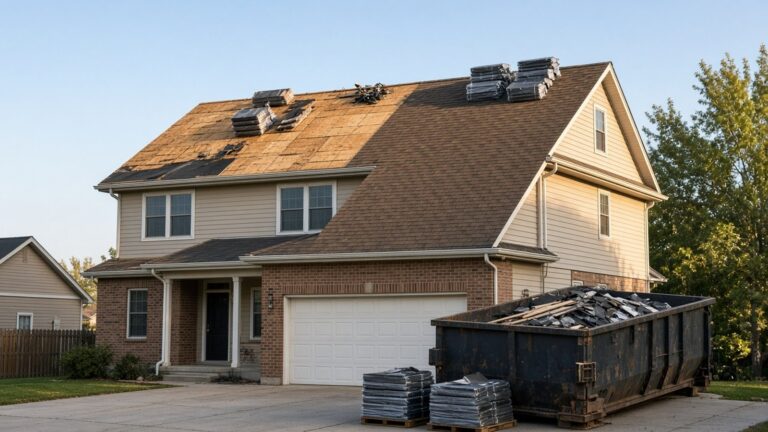
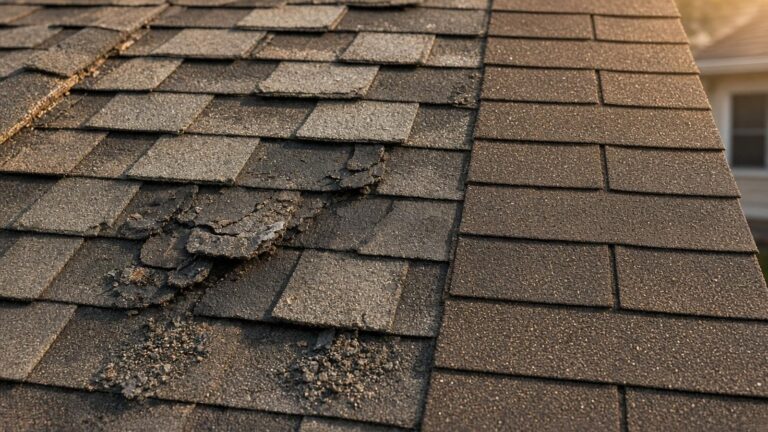
A tear-off means the old shingles come off, down to the deck. Going over the old layer (an overlay) is often cheaper up front. It can also hide wet or rotten decking, add weight, and leave you with a roof nobody can fully inspect.
A lot of places only allow two layers of shingles. Some don’t allow overlays at all. Local rules win, so the quote should spell out what they’re actually doing.
What you want to hear is specific. They’re tearing off to the deck, they priced a certain number of existing layers, and it’s in the written scope. Plus a line on what happens if they find rotten decking after tear-off. That does happen, because a look from the attic doesn’t catch everything.
Be wary of a low price that only works if they nail new shingles over the old ones. Same goes for a verbal “we can overlay to save you money” that never makes it onto the contract. If two quotes are way apart, check this line before anything else.
Who’s actually on my roof?
Ask whether they use their own crew or subcontractors, and who’s in charge on site once the job starts. The guy selling you the roof isn’t always the guy who shows up.
A good answer is plain. In-house crew or named subs, plus a site lead and a phone number for the day of the job. You want somebody to call if the weather turns or the crew needs a decision.
“We’ve got a team,” with no details, isn’t an answer. Neither is a shrug.
The warranty question (it’s really two questions)
There are two warranties, and people mix them up. The manufacturer warranty covers the shingles. The workmanship warranty covers the install itself: nailing, flashing, boots, and leaks that come from a sloppy job.
Ask for both in writing, and ask how long each one lasts. While you’re at it, ask what voids them, whether they transfer if you sell the house, and who you call when something goes wrong.
Watch out for “lifetime warranty” with no paperwork behind it, or a rep who talks all day about the shingle brand and goes quiet on workmanship. Great shingles installed badly still leak.
Are the underlayment, drip edge, boots, and vents new, or reused?
This is one of the easiest ways to make a quote look cheap. Shingles are what you see. Underlayment, drip edge, pipe boots, and vents are a big part of what actually keeps water out. Reusing old boots and metal is a common way to shave a bid.
Look for those accessories listed as new, or anything reused called out with a reason. Ask whether ice-and-water shield goes in at the eaves and valleys, and whether the vents are being replaced.
If the scope just says “new roof” or “architectural shingles” and never mentions underlayment, drip edge, boots, or flashing, don’t assume they’re in the price.
Can I see your license and insurance?
You’re asking to see theirs. License rules vary by state and city, so check what your area requires. Insurance is the one you really don’t want to find out about after somebody gets hurt or a window gets broken.
Ask for a current license number you can look up, and a current certificate of insurance. Usually that’s general liability and workers’ comp.
A legit company hands those over without fuss and gives you time to look. Hesitation, an expired certificate, “we’re bonded” with nothing to show for it, or pressure to sign today before you can check? Walk.
How much down, and when’s the rest due?
A big deposit before any work starts is a red flag. Ask for the payment schedule in the contract. How much up front, what triggers the next payment, and when the balance is due.
A modest deposit, with the rest tied to progress or completion, is normal. Ask if the final payment waits until the job’s done and the cleanup is checked.
Most or all of the money before they roll up, cash only with no paper trail, or “I can start tomorrow if you pay in full today” are all bad signs.
Lining up three quotes side by side
Don’t compare the bottom lines until the scopes match. Put all three quotes next to each other and check the same things on each:
- Tear-off or overlay, and how many layers they’re pricing
- Shingle product (name and type), underlayment, drip edge, boots, vents, and flashing
- How rotten or damaged decking gets handled if they find it
- Manufacturer warranty and workmanship warranty, with the years
- Who does the work, who pulls the permit, and what cleanup includes
- Deposit and payment schedule, start window, and how long they expect to be on site
Say one quote is thousands cheaper, and it turns out to be an overlay with reused boots. That’s a smaller job with a smaller price. The higher bid that tears off to the deck and replaces the flashing might be the cheaper roof five years from now.
Still not sure you even need a new roof? Read our guide to repair vs. replace first, then bring these questions to the quotes.
Checklist to take to the appointment
- Is tear-off included, or are you going over the old layer? Is that in the written scope?
- If you find rotten decking after tear-off, how is that priced and approved?
- Who does the work, your crew or subs, and who is in charge on site?
- What’s the manufacturer warranty, what’s the workmanship warranty, and for how long? Can I have that in writing?
- Are new underlayment, drip edge, pipe boots, and vents included, or reused?
- Can I see your license and current insurance certificate?
- How much is the deposit, when is the rest due, and is a large upfront payment required?
- Who pulls the permit, what’s the start window, and what’s included in cleanup?
Write the answers right on the quote. If they won’t put it in writing, well, that’s your answer.
FAQ
How many quotes do I need?
Two or three detailed ones. With just one, you’ve got nothing to compare it to.
What if one price is much lower than the others?
Assume the scope is different until you prove it isn’t. Check tear-off, accessories, warranties, and how decking is handled.
Do I have to ask all of this in person?
If you can, yes. Ask while the rep is there, then get the answers onto the written quote before you sign anything.