How Much Does a Roof Replacement Cost? What Actually Moves the Price
There’s no single price for a new roof. Two houses on the same street can get very different quotes, and the gap is usually the work itself.
Below are typical national ranges from industry guides, plus the stuff that actually pushes your number up or down. Use them to sanity-check a quote. Don’t use them to skip getting one. And pair this with the questions to ask before you sign.
The ballpark numbers
According to Angi’s 2026 roof replacement guide (updated October 22, 2026), the national average is $9,611, based on 32,999 verified projects. Most homeowners in that data paid between $5,903 and $13,380. Angi puts typical installed cost at $4 to $11 per square foot.
HomeAdvisor’s roof replacement cost guide (updated June 17, 2026) uses the same average and range, and says typical installed cost averages about $7 per square foot.
Quick note on how roofers measure. They price in “squares,” and one square is 100 square feet of roof area. Roof area. Your living space doesn’t count here. Your roof is usually bigger than the house footprint. HomeAdvisor puts it at roughly 1.1 to 1.2 times the home’s square footage, depending on shape and slope.
This Old House’s 2026 new-roof cost guide (updated October 7, 2026), using Homewyse data, puts a 2,000-square-foot asphalt shingle roof at about $10,319, or $5.16 per square foot. They also list a higher overall average of $29,909 for a 2,000-square-foot roof. That one mixes in pricier stuff like metal and tile, so don’t hold it up against an asphalt quote.
Then there’s the 2025 Cost vs. Value Report, which lists a national job cost of $31,871 for a defined asphalt-shingle replacement project. That’s one specified sample job. It isn’t an average of every bid out there, which is why it lands above the Angi and HomeAdvisor range. I’d treat it as a benchmark for a complete midrange replacement and leave it at that.
If your quote is way outside these ranges, read the scope before you panic (or celebrate).
Vents, chimneys, skylights, and that AC unit on the roof
This is one of the first places two quotes split apart. A clean roof with a few plumbing vents is a much easier job than one with skylights, a chimney, and a rooftop AC unit.
Pipe boots, vents, skylights, and chimneys all have to be flashed right. If they aren’t, the new roof can leak on day one.
A rooftop AC unit often has to be detached and reset so the crew can work under and around it. Sometimes that means bringing in a separate trade. Either way, it should show up as a line item.
I don’t have a national price for a detach-and-reset that I’d trust enough to print. What I’d do is make sure the quote names the equipment and every penetration, and says whether those charges are included. If it never mentions the AC unit sitting up there, ask.
Before you compare bids, make your own list of every penetration, from the ground or from photos. If one quote covers them and another doesn’t, you’re comparing two different jobs.
Extra layers
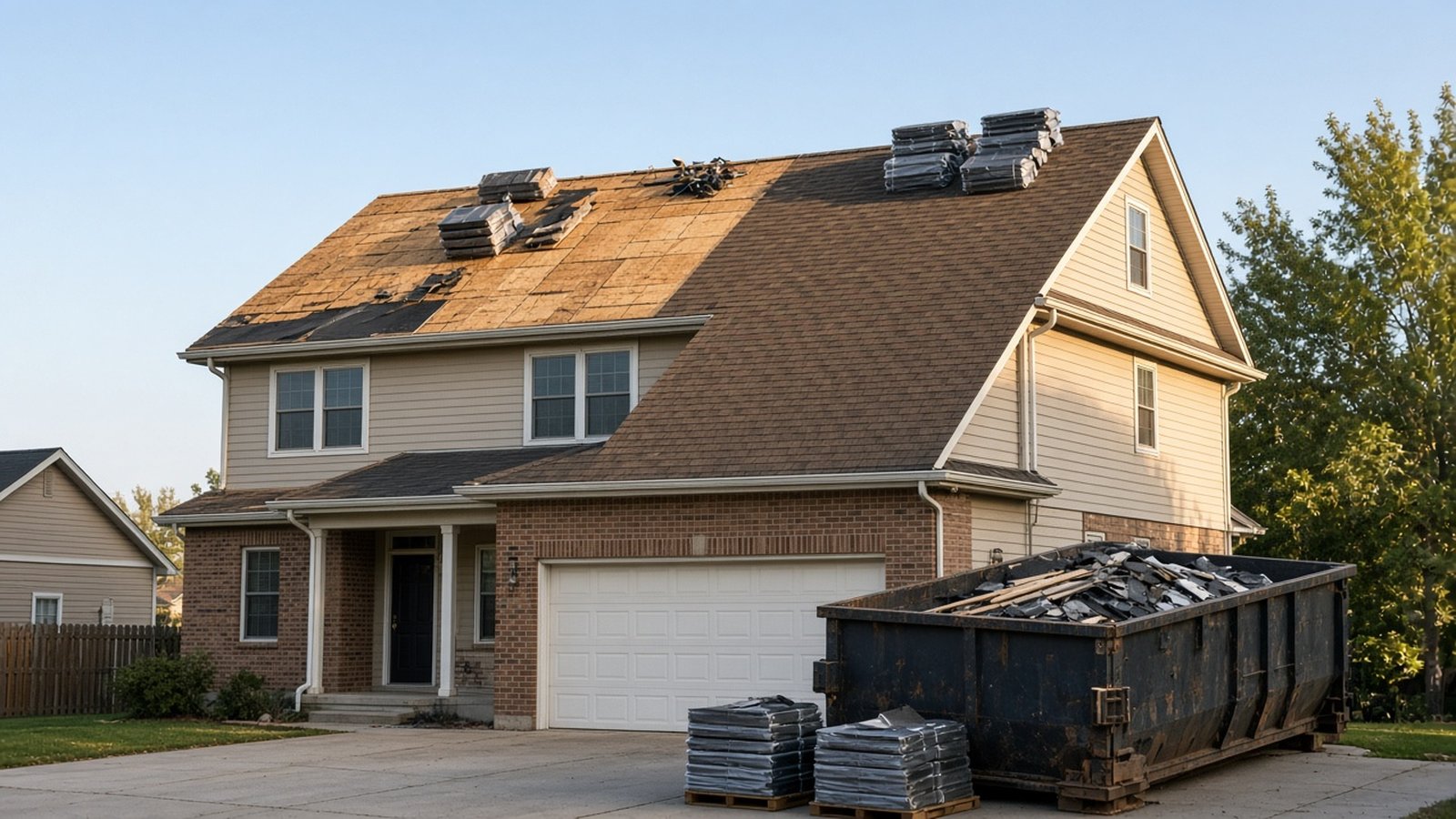
Tear-off means labor, time, and disposal. A second layer means more of each.
HomeAdvisor estimates old-roof removal at an additional $1,000 to $3,000, plus $500 to $1,500 for hauling and disposal, and also cites combined removal and disposal fees of $1,500 to $4,500. Those are typical national ranges. A second or third layer usually lands at the higher end.
Going over the old shingles can look cheaper. It also hides the deck, adds load, and may not even be allowed where you live. HomeAdvisor notes that leaving the existing roof in place makes it harder to spot rotting wood or leaks.
So if a quote is low because they’re going over the old layer, you’re paying less because you’re getting less. Get tear-off versus overlay in writing. There’s a reason the questions to ask a roofer start there.
Rotten decking (the surprise that blows budgets)
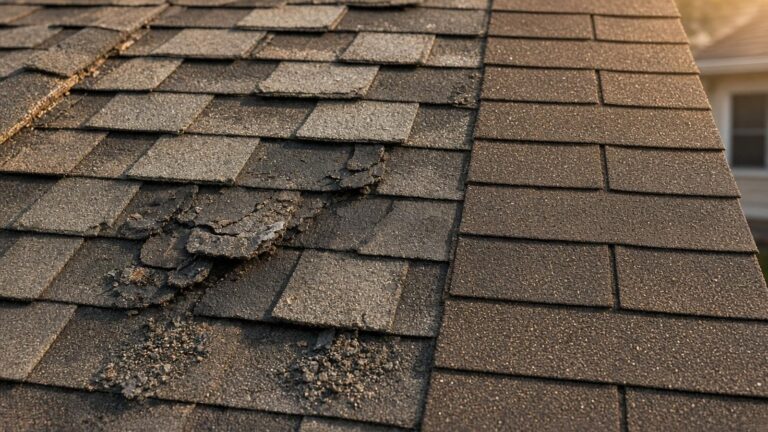
Soft or rotten decking often doesn’t show up from the attic or an inside look. It shows up when the old shingles come off.
A lowball quote sometimes assumes a perfect deck. Then the crew finds bad sheathing and you’re negotiating a change order in your driveway. That’s a bad spot to be in.
A better quote says up front how surprise decking work gets handled. An allowance, a unit price, or a written approval step all work.
I’m not going to make up a per-sheet price. What matters is that the process is in the contract. And if you’re still on the fence about replacing at all, check our guide to repair vs. replace. Soft or wet decking usually means you’re talking replacement, and a patch won’t cut it.
Steep roofs cost more
Steeper roofs take more labor and more safety setup. They often take more material, too, compared to a low-slope roof on the same footprint.
HomeAdvisor says slopes of 9 inches of rise in 12 inches of run (9/12) or more are considered exceptionally steep, and that a steep roof can add $1,000 to $3,000 on top of a standard replacement. Angi also lists pitch as a primary factor in the total. Treat that add-on as a typical national range for planning.
When the bids come in, see if they describe the pitch and access the same way. A cheap quote that assumed an easy roof won’t hold up on a steep one.
Everything else: size, material, labor, permits, disposal
Size is the easy one. More squares, more money. Angi notes that a typical home’s roof is often in the 1,300 to 1,800 square foot range, and that a steeper pitch adds surface area beyond the footprint. Don’t use your living area as the roof size. Ask how many squares they measured.
Material is the other big swing. For a 1,500- to 2,000-square-foot roof, HomeAdvisor lists typical installed asphalt shingles at $3 to $7 per square foot, or about $5,800 to $20,000, and architectural shingles at $4 to $6 per square foot, or about $6,000 to $12,000. Metal, tile, and slate run higher. This Old House’s asphalt figure of about $10,319 for a 2,000-square-foot roof sits inside those ranges. Its metal and clay averages for the same size are much higher.
Where you live matters too. HomeAdvisor says roofers in high-cost urban areas generally charge more, and lists labor at about $200 to $300 per square, not including materials. Angi puts a typical roofer at $40 to $90 per hour, with most jobs needing at least two workers.
Most towns require a permit. HomeAdvisor puts permit costs at $100 to $1,400, depending on the area and the project, and Angi’s building-permit guide lists a typical roofing permit at $250 to $500. Ask who pulls it and whether the fee’s in the quote.
Disposal is easy to forget. HomeAdvisor’s $500 to $1,500 hauling-and-disposal range, and the combined $1,500 to $4,500 removal-and-disposal range, make a decent national gut check, especially with more than one layer. If a quote doesn’t mention disposal at all, ask who’s paying for it.
When the quotes come in
Don’t start with “who’s cheapest?” Start with “are these even the same job?”
Check tear-off, layers, penetrations and rooftop equipment, how rotten decking is handled, pitch, material, permit, and disposal. Then look at the number.
A bid way below the national ranges above might be an overlay, a thinner scope, or a number that’s going to grow once the deck is exposed. A bid way above might be pricing a steep pitch, extra layers, or a lot of flashing and equipment work. Or it might just be a heavy quote. Honestly, that happens too.
Take the question list to the appointment, get the answers in writing, and line up three quotes side by side.
FAQ
Why is my quote higher than the national average?
The averages include a lot of simple asphalt jobs. Steep pitch, extra layers, a big roof, pricier material, an expensive market, or a lot of penetrations will all push you up. Compare the scope before you compare to the average.
Does a low quote mean I found a deal?
Not until you check what’s in it. A low number that skips tear-off, reuses old boots, or ignores the AC unit on the roof isn’t a deal.
Can I save money by going over the old shingles?
Up front, maybe. It can also hide rotten decking, add weight, and run into local limits on layers. If a contractor suggests it, get it in writing and compare it to a tear-off bid.